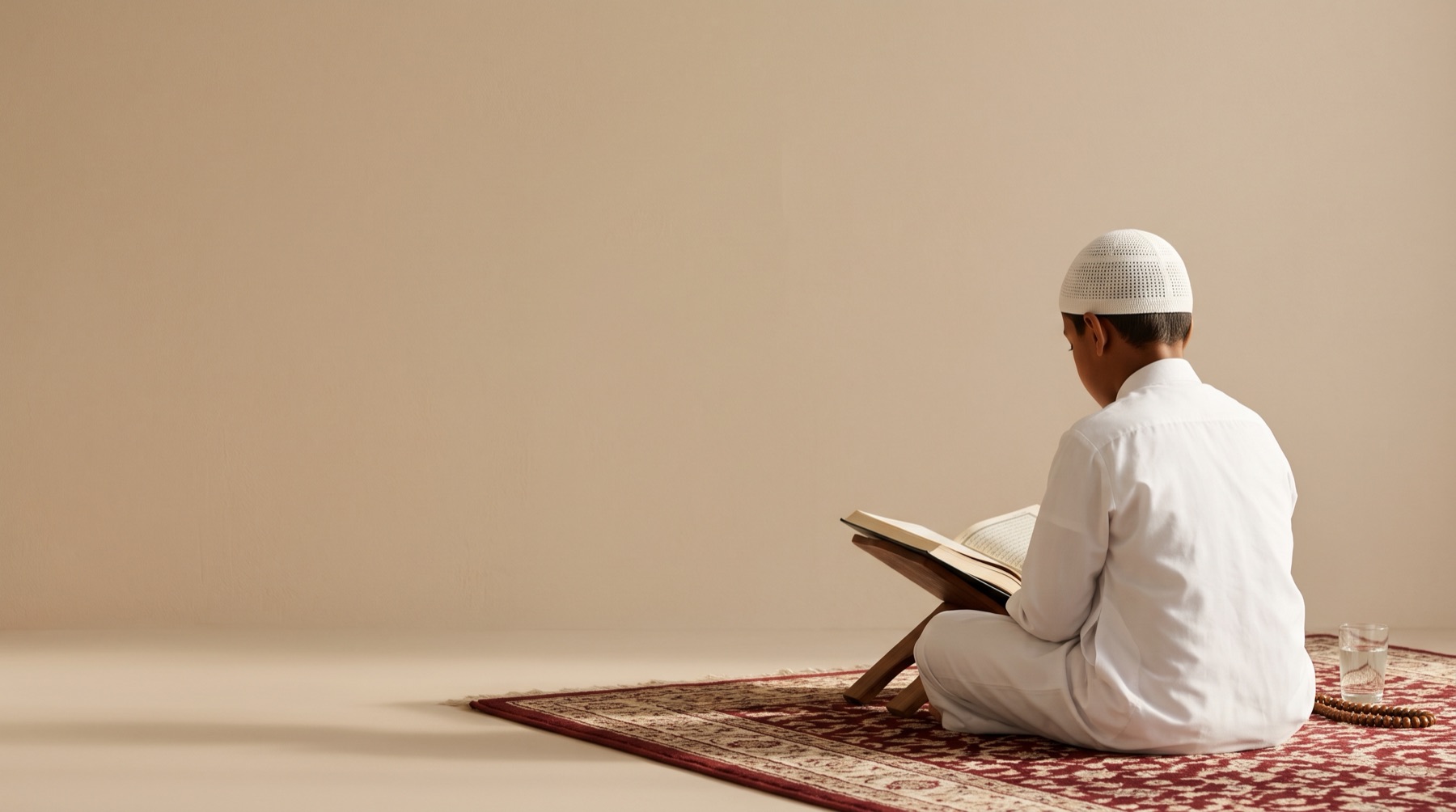
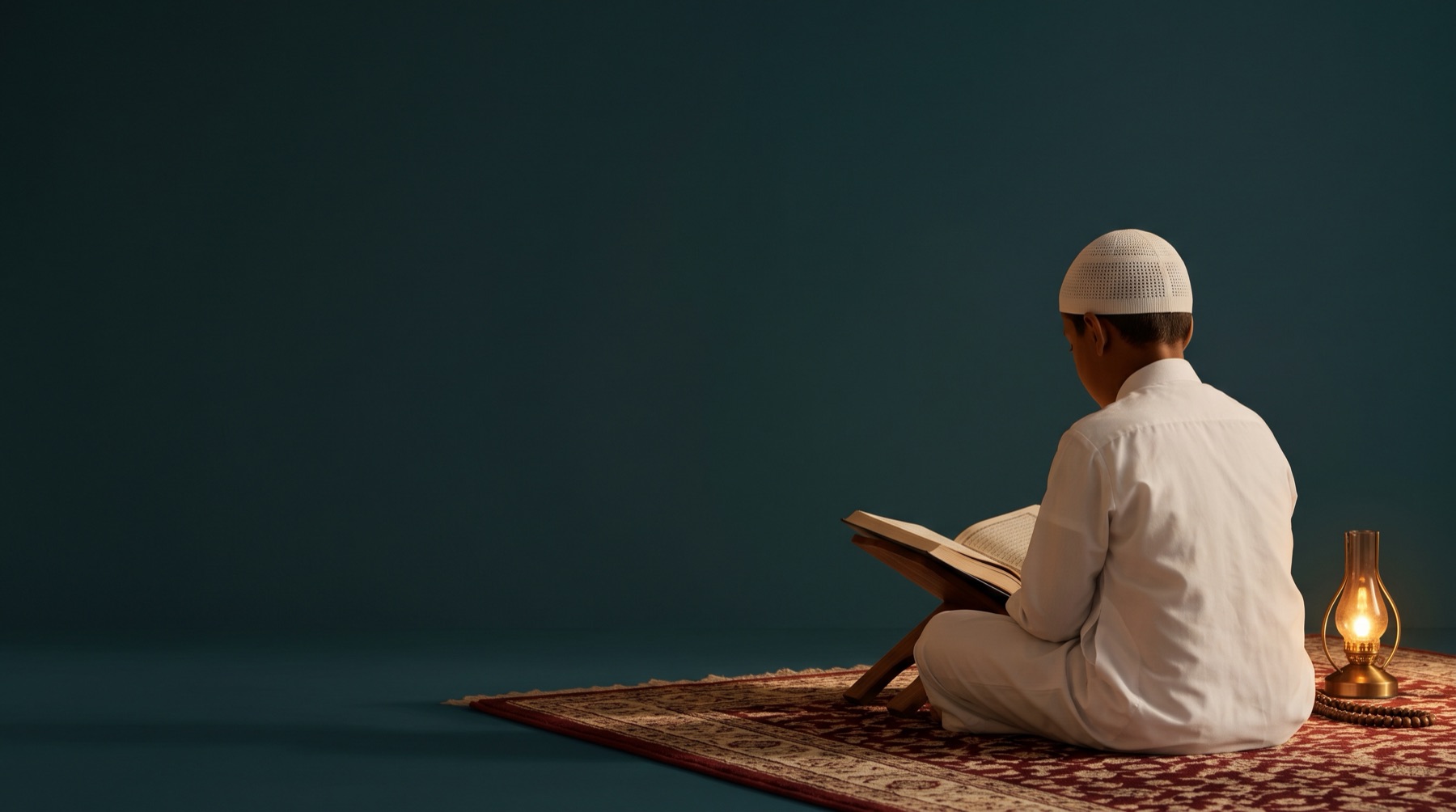
Readiness first, then age
Readiness tells you far more than age. Hifz means memorising the Qur’an, usually step by step from the shorter surahs (chapters of the Qur’an), with regular revision so that what is learnt stays.
Many young children already know a few short surahs from hearing them at home. For many children, more structured hifz begins once they can read the Qur’an steadily, which often falls somewhere in the early school years. These are rough guides, not rules: some children are ready sooner, others later, and both are fine.
If your question is about starting Qur’an lessons in general rather than hifz, we cover that in what’s a good age to start learning the Qur’an online.
What readiness looks like
Look at your child rather than at the calendar. These signs usually matter most:
- They can read, or are learning to read the Arabic letters and short words.
- They can sit for a short lesson and follow what the teacher asks, with a little help.
- They enjoy listening to recitation, and sometimes join in on their own.
- They already know some surahs, even only Al-Fatihah and one or two short ones.
- They take correction calmly and are happy to try a line again.
Your child doesn’t need every sign to begin. If several are there, they can usually start gently. If none are there yet, that tells you what to work on first, often listening and reading, rather than that hifz is out of reach.
Very young children: memorising by listening
Young children are often good at picking up what they hear again and again. Before they can read, many memorise short surahs simply by listening and repeating: a parent reciting at bedtime, a recording in the car, a teacher saying a line and the child saying it back.
This kind of memorising is worth a lot. It builds familiarity with the sound of the Qur’an and gives the child surahs to pray with. Keep it light: a few minutes, plenty of praise and a stop before your child tires. Short surahs from the end of the Qur’an, such as Al-Ikhlas, Al-Falaq and An-Nas, are a natural place to start.
When formal hifz usually begins
Formal hifz usually begins once your child reads steadily. Reading lets them memorise from the mushaf (the printed Qur’an), check themselves at home and revise without always needing someone to recite to them. It also means the teacher can work on correct pronunciation as they go.
Many children first learn to read with a primer such as the Noorani Qaida or Noor Al-Bayan, then move into the Qur’an itself. Tajweed (the rules for pronouncing each letter and sound of the Qur’an correctly) can then grow alongside memorising; we explain how in Tajweed before hifz, or during it?
At this stage, a lesson usually mixes new memorising with revision of what came before. How much is new each time depends on the child, and the teacher sets the pace with you.
Older children and adults: it is never too late
Starting hifz at ten, fourteen or forty is not starting late. Older children often move steadily because they can focus for longer, understand why revision matters and set goals of their own. Adults bring patience and a clear reason for wanting to learn.
If an older child or an adult can’t yet read the Qur’an well, they simply begin there, and memorise short surahs by listening at the same time. In a one-to-one lesson nobody else is listening, and the teacher simply begins from where they are. Girls and women are always taught by women; older boys and men are taught by men.
How the teacher decides where to begin
At Radiance, the first lesson is where this question is answered for your child. The teacher listens to them read or recite whatever they know and sees how they respond to a new line. Then they tell you where your child would begin.
For one child that means memorising from the mushaf straight away. For another, it means building reading first while learning short surahs by ear. Either way, the plan fits the child in front of the teacher, not an age on a chart.
Helping at home
Let them hear it
Play or recite the surah your child is learning during the day, so it is familiar before they memorise it.
Keep it brief and daily
A few minutes most days works better than cramming before the lesson. Our daily hifz routine shows how to fit it in.
Listen to them recite
Ask your child to recite what they learnt to you. Leave the corrections to the teacher; your part is to listen and encourage.
Follow the report
You receive a written report after every lesson, so you know what to revise at home.
Above all, protect your child’s love for the Qur’an. A child who looks forward to the lesson will keep going far longer than one who is pushed ahead of where they are.
Questions parents ask
What age should a child start hifz?
There is no fixed age. Many children memorise short surahs by listening from an early age, and more formal hifz usually begins once they read steadily. The teacher suggests what suits your child.
Can a child memorise the Qur’an before they can read?
Yes, short surahs can be memorised by listening and repeating. A teacher should listen regularly so that pronunciation mistakes are corrected early.
Is my 12-year-old too old to start hifz?
No. Older children often focus well and understand why revision matters. If their reading needs work, they can build it alongside memorising short surahs.
Can adults start hifz?
Yes. Adults can start at any level, including learning to read first, and they can book a free first lesson as well.
Does my child need to finish the Noorani Qaida before hifz?
Not always. Many children memorise short surahs by listening while they work through a primer, and steadier hifz from the mushaf follows once reading is secure. The teacher suggests what suits your child.