Yes, you can, with a small, steady plan
If you work, raise a family or both, you can still learn the Qur’an online with a busy schedule. What makes it work is not finding hours you don’t have. It is a plan small enough to keep: short lessons at fixed times on your own clock, a few minutes of practice on most days and a way to move a lesson instead of losing it.
This guide is for adults learning for themselves: parents who never had the chance as children, working people coming back to the Qur’an after years away and new Muslims starting from the first letter.
Lessons that fit the week you really have
Many adults plan for the week they wish they had: an hour every evening, long weekend sessions. A few weeks later, real life wins and the plan quietly stops. It is wiser to begin with something you can keep in your hardest week.
- Short lessons are enough to start. Thirty minutes with a teacher, twice a week, gives you something new to practise and someone to hear your progress.
- Fixed times help. A lesson at the same time each week becomes part of the routine, like a standing appointment, and is harder to push aside.
- Pick your clearest hour. For some that is before work, for others after the children are asleep or in a lunch break. Choose the time when your mind is free, not just the time that is empty.
You can add more time later, once the habit is settled. Going up is easier than starting again after giving up.
Small daily practice between lessons
The lesson is where you learn something new and are corrected. Practice is where it sticks. For a busy adult, that practice can be very short, as long as it happens on most days.
Tie it to something you already do
After Fajr (the dawn prayer), after dropping the children at school or before you open your laptop. A fixed moment matters more than a long session.
Do only what the teacher set
A few letters, a line of reading or a short surah. Practising the right thing for a few minutes beats reading widely with mistakes.
Read aloud
Reading the Qur’an is learnt with the tongue and the ear. Say the sounds out loud, even quietly, rather than reading with your eyes alone.
Listen when you can’t read
On the commute or while cooking, listen to the surah (chapter of the Qur’an) you are learning, recited slowly and clearly. It keeps the sounds fresh on days when sitting down is hard.
The Prophet ﷺ reminded us that small and steady is beloved:
The Prophet ﷺ said: “The most beloved of deeds to Allah are those done regularly, even if they are few.”
When a week goes wrong
Some weeks will not go to plan: a late meeting, a sick child, travel. That is normal, and it does not mean the plan has failed. Two things help:
- Move the lesson, don’t drop it. Rescheduling keeps the thread unbroken. Skipping often turns one missed week into a month.
- Keep the smallest version going. On the worst days, read one line or listen to one surah. It keeps you connected until things calm down.
How fast you move depends on where you start, how often you have lessons and how much you practise, so no honest teacher will promise a date. What matters most is that you keep going.
Starting as an adult beginner
Many adults feel shy about starting from zero, especially if their children already read better than they do. There is no shame in it. Every reader of the Qur’an once learnt their first letter, and the effort of a learner who finds it hard is itself rewarded.
One-to-one lessons make this easier. No one else is listening, you set the pace and you can ask the same question twice without feeling watched. Adults often learn the letters quickly; the sounds made deep in the throat usually take a little longer, and that is expected.
If you don’t speak Arabic, that is no barrier either. You can ask for a teacher who explains in a language you understand. New Muslims are welcome to start right at the beginning, with Al-Fatihah and the short surahs used in prayer, learnt by listening as well as reading.
Who teaches adults
Women are always taught by women, and men by men. That holds for new Muslims too. Many adults find it easier to relax, ask questions and make mistakes out loud when this is settled from the start.
Having the same teacher every week matters even more when your time is short. You don’t spend lessons explaining yourself again; the teacher already knows where you stopped and what you find hard.
How it works at Radiance
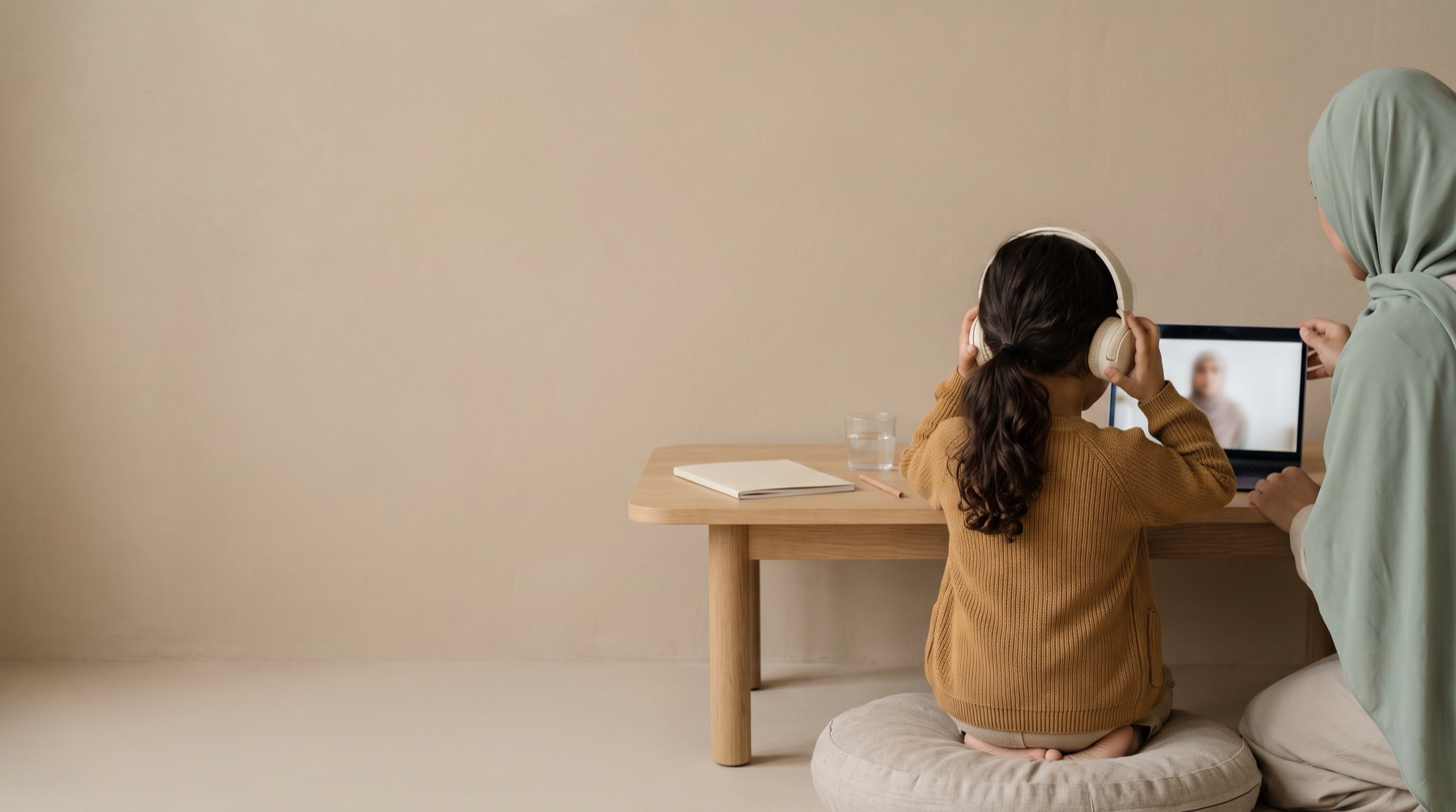
Lessons are live and one-to-one on Zoom, on a computer, tablet or phone, so you can learn from home, the office or wherever you have a quiet corner. Times are set on your clock. If you need to move a lesson, tell us at least an hour before and it is rescheduled.
The shortest plan is two 30-minute lessons a week, for £25, €28 or $32 a month, and you receive a written report after every lesson. The free first lesson is for adults as well as children.
Questions parents ask
Can I learn the Qur’an online if I work full time?
Yes. Short lessons at fixed times, before or after work, and a few minutes of practice on most days are enough to make steady progress.
How much time do I need each day?
There is no fixed amount. A few focused minutes on what the teacher set, on most days, usually does more than a single long sitting. Your teacher can suggest what suits you.
What if I have to miss a lesson?
Tell us at least an hour before and the lesson is rescheduled, so you don’t lose it.
Is it too late to start learning the Qur’an as an adult?
No. Adults start from the first letter all the time, and one-to-one lessons let you learn at your own pace without feeling watched.
Will a woman teach me?
Yes. Women, including new Muslims, are always taught by women, and men by men.
Is there a free first lesson for adults?
Yes. It lasts 30 minutes, with no card and no commitment, and the teacher finds where you would begin.